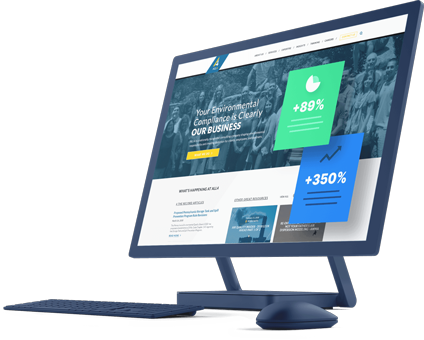

Every business website stands as a frontline ambassador—but the homepage isn’t just a welcome mat; it’s a guided path. Without clear direction, even the most compelling content fails to convert. For business owners focused on leverage and clarity, structuring your homepage to guide visitors decisively is both an art and a science.
Crafting this roadmap means understanding precisely what visitors need to do next and removing ambiguity from their journey. This article unveils practical, tactical strategies to design your homepage so visitors don’t just arrive—they act.
Defining Clear Visitor Intentions: The Foundation of Homepage Structure
Your homepage must first clarify what visitors should do next. This depends entirely on your business goals and audience profiles. Do you want inquiries? Sign-ups? Direct purchases?
- Identify your primary conversion goal: Pinpoint the one action you want most visitors to take.
- Prioritize clarity over content overload: Resist the urge to showcase everything on the homepage.
Because your business may intersect marketing and social needs, align the homepage messaging tightly with those objectives. For instance, if leveraging local SEO, immediately signal your geographic relevance.
Leveraging Subtle UX Cues To Build Trust and Drive Action
Visitors subconsciously respond to subtle visual and interaction cues. According to Altflex’s deep-dive into subtle UX cues that build trust on service websites, these nuanced elements can be the tipping point between bounce and engagement.
Key UX cues to implement:
- Directional signaling: Use arrows, whitespace, and visual flow to guide eyes to your CTA.
- Consistent button styling: Ensure CTAs stand out but fit your site’s aesthetic.
- Trust indicators: Display testimonials, certifications, or local partnerships subtly nearby your primary CTA.
This framework creates an intuitive journey, lowering decision friction.
Structural Elements That Anchor Visitor Decisions
A high-performing homepage weaves these core sections in a clear, ordered hierarchy:
- Headline and value proposition: Grabs attention and states your offer’s core benefit in one to two lines.
- Supporting evidence: Brief testimonials, awards, or social proof establishing credibility.
- Primary call to action (CTA): The direct next step, whether to contact, subscribe, or shop.
- Secondary content: Additional options for engagement such as blog links or social media.
Two bullet lists for actionable clarity:
Essential homepage content considerations:
- Use concise, benefit-oriented language.
- Include no more than two primary CTAs.
- Ensure mobile and desktop UX consistency.
- Optimize load speed to retain visitors.
Common homepage pitfalls to avoid:
- Overwhelming visitors with too many options.
- Using generic CTAs like "Submit" instead of task-focused ones.
- Neglecting accessibility, risking legal implications (see Is My Website ADA Compliant?).
Implementing a Proven Framework: The 5-Step Homepage Directive Design
Transform homepage visitors into leads or customers with this structured approach:
- Define your target audience and their top goal.
- Craft a sharp, benefit-driven headline with a compelling subheading.
- Place primary CTA above the fold with visible UX cues pointing to it.
- Reinforce with social proof or local relevance (e.g., local SEO elements).
- Add a concise secondary CTA or resource link for lower-commitment engagement.
Incorporate this checklist to audit your current homepage:
- [] Is the main CTA action-oriented and crystal clear?
- [] Does the visual hierarchy guide visitor attention effectively?
- [] Are trust signals placed near key decision points?
- [] Is content chunked into digestible, scannable blocks?
- [] Have potential distractions been minimized?
Balancing Design and Marketing: Beyond Templates to Tailored Experiences
While website templates and tools like WordPress or Elementor offer rapid deployment, they often lack the nuance needed for strategic homepage structuring. Customization aligned with your unique market positioning is critical.
Consider how a redesign might optimize your homepage’s funnel (read more on What Goes Into a Website Redesign?). Simple tweaks—like refining your headline, adjusting CTA placement, or adding localized SEO content—can yield compounding returns.
Understanding your homepage as a dynamic business tool, not a static page, enables continuous refinement grounded in analytics and customer feedback.
Altflex supports serious business owners who want to sharpen their website’s strategic impact. If clarity and actionable structure are your goals, learning to optimize subtle UX cues and carefully architect your homepage is non-negotiable.
Ready to turn your homepage into a defined path for customer action? Explore expert website maintenance and redesign strategies with Altflex here.